Stunning Interior Design Posts: Your Instagram Template
You know the feeling. You’ve just finished a client project, a beautiful room transformation that you’re genuinely proud of. You snap a few photos, but when you open Instagram, the dread sets in. How do you make that image stand out in a sea of perfectly curated feeds? How do you present your work in a way that looks professional, cohesive, and unmistakably yours without spending hours fiddling with graphics software? This is the daily reality for interior designers, furniture makers, and home decor brands. The visual platform demands more than just a good photo; it requires a strategic presentation. That’s where a thoughtfully designed Interior Design Furniture Instagram Post template becomes less of a luxury and more of a fundamental tool in your creative arsenal.
Beyond the Photo: Crafting a Visual Brand Language
Think of your social media grid as your digital storefront or portfolio. Every post is a pixel in a larger picture of your brand identity. A consistent visual language builds recognition and trust. When a follower sees your post, they should instantly know it’s from you before even reading the caption. This consistency comes from repeating key design elements: a specific color palette, a layout style, and—critically—a typography system.
This is precisely the gap a dedicated template fills. It provides the structural backbone for your visuals. Imagine having a go-to layout for before-and-after reveals, a clean frame for featuring a new furniture piece, or an elegant banner for announcing a sale. The template ensures that every time you post, the core design elements—your chosen fonts, your logo placement, your brand colors—remain fixed. This transforms your feed from a random collection of images into a curated gallery that speaks a single, professional visual dialect. The result? Your audience begins to associate that specific style with quality and expertise, making your brand instantly recognizable as they scroll.
Practical Applications for Maximum Impact
The true value of a design asset lies in its versatility. A well-built template isn’t a one-trick pony; it’s a springboard for numerous creative and marketing initiatives. Let’s break down how you can leverage this specific type of design asset across your entire workflow.
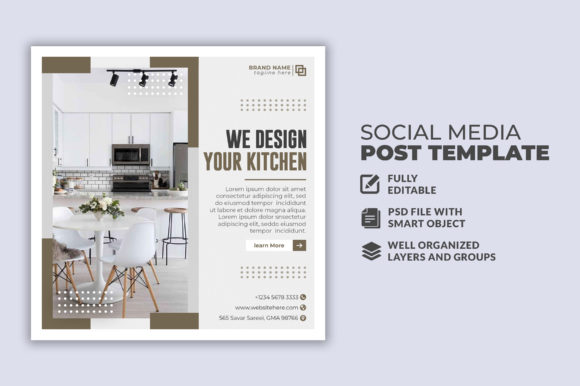
First and foremost, it streamlines your social media graphics creation. Instead of designing from scratch each time, you simply swap out the image and update the text. This is invaluable for maintaining a regular posting schedule, which is key to algorithm performance. But its utility extends far beyond a single Instagram post. The layered PSD file format means you can easily adapt the design for other platforms. Resize it for a Facebook cover, a Pinterest pin, or a Twitter header, ensuring brand cohesion across all channels.
For designers and small business owners, the applications are even broader. Use the template layout to create stunning mockups for your packaging design presentations. Adapt the typography hierarchy for editorial layouts in digital lookbooks or printed catalogs. The clean, organized layers make it simple to extract elements for other projects. Pull the elegant serif font pairing used in the template for your next logo design project or apply the modern sans-serif style to your website headers for improved readability and professional presentation. It becomes a central hub for your brand’s typographic voice.
Furthermore, these templates are perfect for creating marketing assets that feel polished and premium. Design promotional flyers for local events, craft email newsletter banners, or develop digital ads that carry the same visual weight as your organic posts. For content creators and bloggers, it’s a quick way to generate branded quote graphics, blog post announcements, or story covers that maintain your aesthetic. Even for personal projects like invitations or merchandise, the design principles embedded in a good template—balance, hierarchy, and style—ensure a beautiful outcome.
Making It Your Own: Customization and Best Practices
Getting a template is the first step; making it an authentic extension of your brand is the next. The beauty of a fully layered and editable file is the control it offers. Here’s how to approach customization effectively.
Start with the fonts. The template likely uses a curated font pairing—perhaps a sophisticated serif font for headlines and a clean sans-serif font for body text. Don’t feel locked in. Use this as a starting point. If your brand voice is more playful, you might swap the serif for a handwritten font or a script font for accents. If your style is ultra-modern, lean into geometric sans-serifs. The key is to choose typography that reflects your brand’s personality. Is your furniture brand rustic and artisanal? A warm, textured serif might be perfect. Is it sleek and contemporary? A minimalist sans-serif will communicate that instantly.
Next, consider color. While the template may come with a default palette, your brand colors should take precedence. Use the layered structure to quickly change background hues, text colors, and graphic elements. This single change will dramatically transform the template from a generic asset into something that is uniquely yours. Ensure the colors you choose have enough contrast for readability, especially for text overlays on images.
Finally, test your font pairings and layouts. Does the headline font work at different sizes? Is the body text legible when placed over a busy furniture photograph? Sometimes, a font that looks great in isolation can get lost in a complex composition. Print out a few variations or view them on different devices. This practical testing phase is what separates amateurish results from a truly professional presentation.
A Smart Investment in Your Creative Workflow
In the fast-paced world of digital marketing and design, efficiency is currency. Spending hours on a single social media post is unsustainable. An Interior Design Furniture Instagram Post template is a strategic investment that pays dividends in saved time, enhanced brand consistency, and elevated content quality. It removes the friction from the creation process, allowing you to focus on what you do best: designing beautiful spaces and products. By providing a polished, customizable framework, it empowers you to produce social media graphics, marketing assets, and digital products that resonate with your audience and reflect the high caliber of your work. It’s not just about making a post; it’s about building a visual legacy, one consistent, well-designed piece of content at a time.